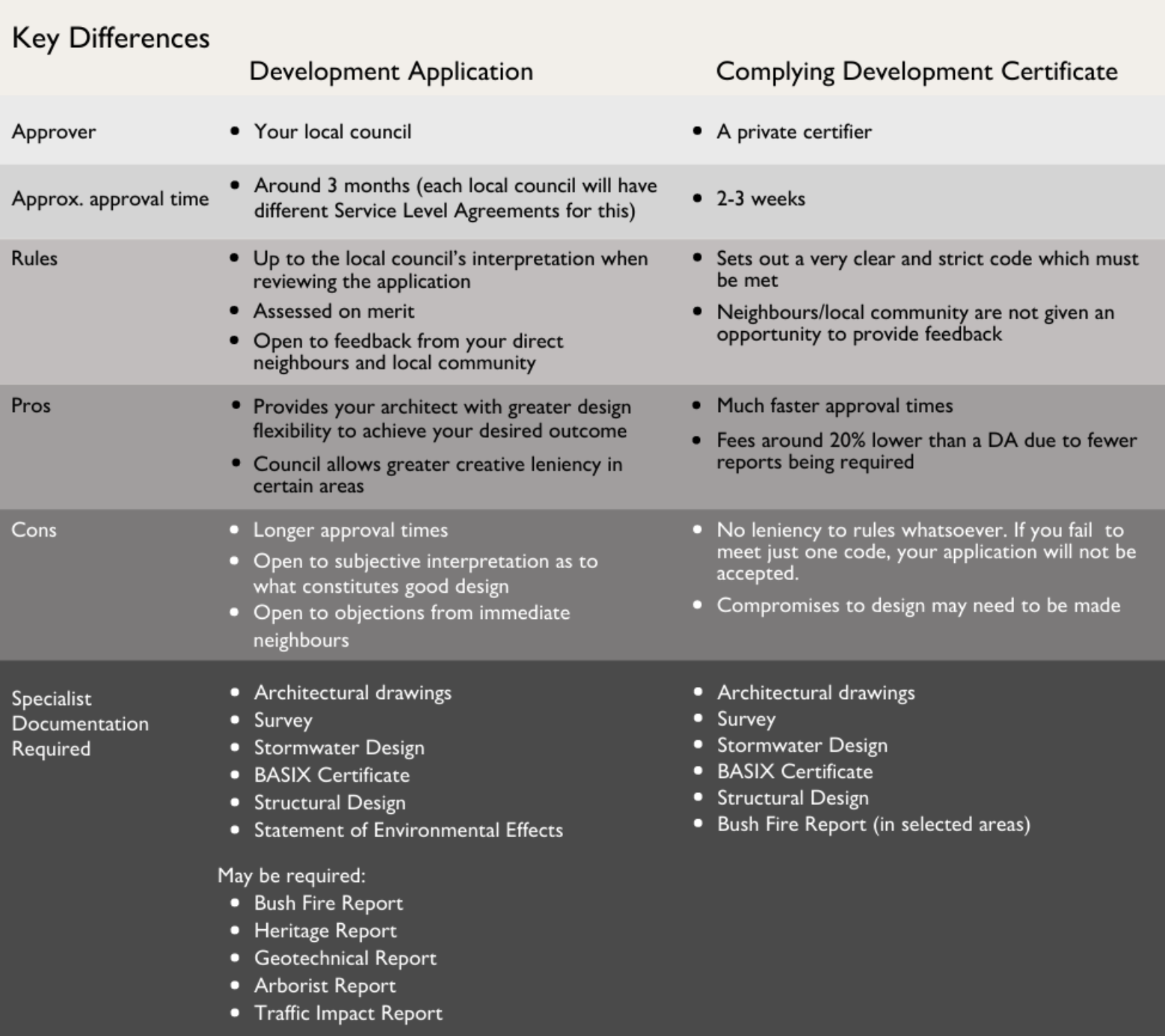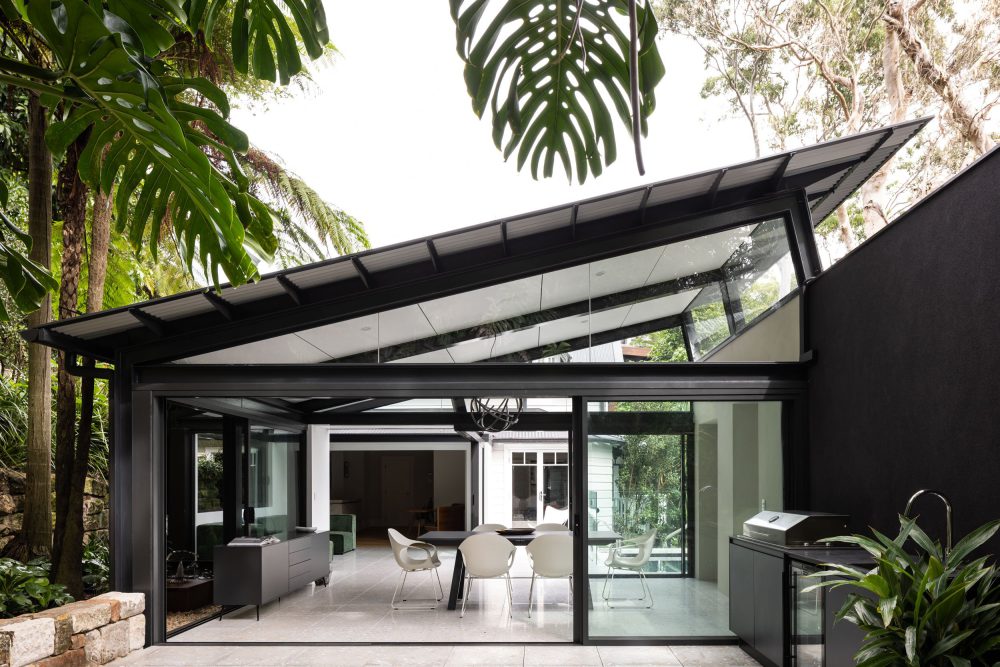
While each option presents its own pros and cons, the two main differences between these are: Speed of approval, and Level of design plan flexibility. Either way, a DA or CDC must be lodged and have approval granted by the respective entity before any building work can commence on your project.
Development Application
A Development Application (DA) is submitted through your local council – ether by yourself or your Architect. The specific controls for a DA may vary, depending on the local council your block resides in, and will be laid out in that council’s Development Control Plan (DCP) and Local Environmental Plan (LEP).
Pro Tip:
It’s a great idea to share your plans with your neighbours before you lodge your DA, and discuss any potential concerns or objections they may raise. This approach gives you an opportunity to address and resolve any neighbourly issues prior to lodgement and save you potential weeks of dispute letter response and negotiations during the planning review process.
At the application lodgement stage, council will ensure you’ve supplied the correct documentation, request any additional required information, notify neighbours (and the community, where applicable), and engage internal or external expert referrals. You will also be allocated an assessment officer as a main point of contact for your DA.
Pro Tip:
Pro Tip: Preparing your plans for DA lodgement can be a complicated and lengthy process, with lots of back and forward with your local council until they have all they need from both your Architect and other Consultants. Always check if your Architect has included DA lodgement as a part of their Fee Proposal as this will save you hours of administrative work and follow up.